A Trenton Restoration Call, Start to Finish
A Trenton call hits our dispatch the same way every other call does — a person picks up, gets the address, gets the loss type, and starts a truck moving while we are still on the phone with you. No call center routing, no answering service. The first conversation captures access details (gate codes, building manager contact, parking constraints) so the crew arrives ready to start work, not to gather information.
Active emergency response — water actively intruding, fire just extinguished, sewage actively backing up — runs to a sub-hour on-site target across our service area. Trenton is roughly 3 miles from where our Hamilton Township crew bases out of, so under normal traffic that is a 10-20 minute response. We pre-stage trucks and equipment for the seasonal surge windows specifically so individual arrival times do not slip during storm events.
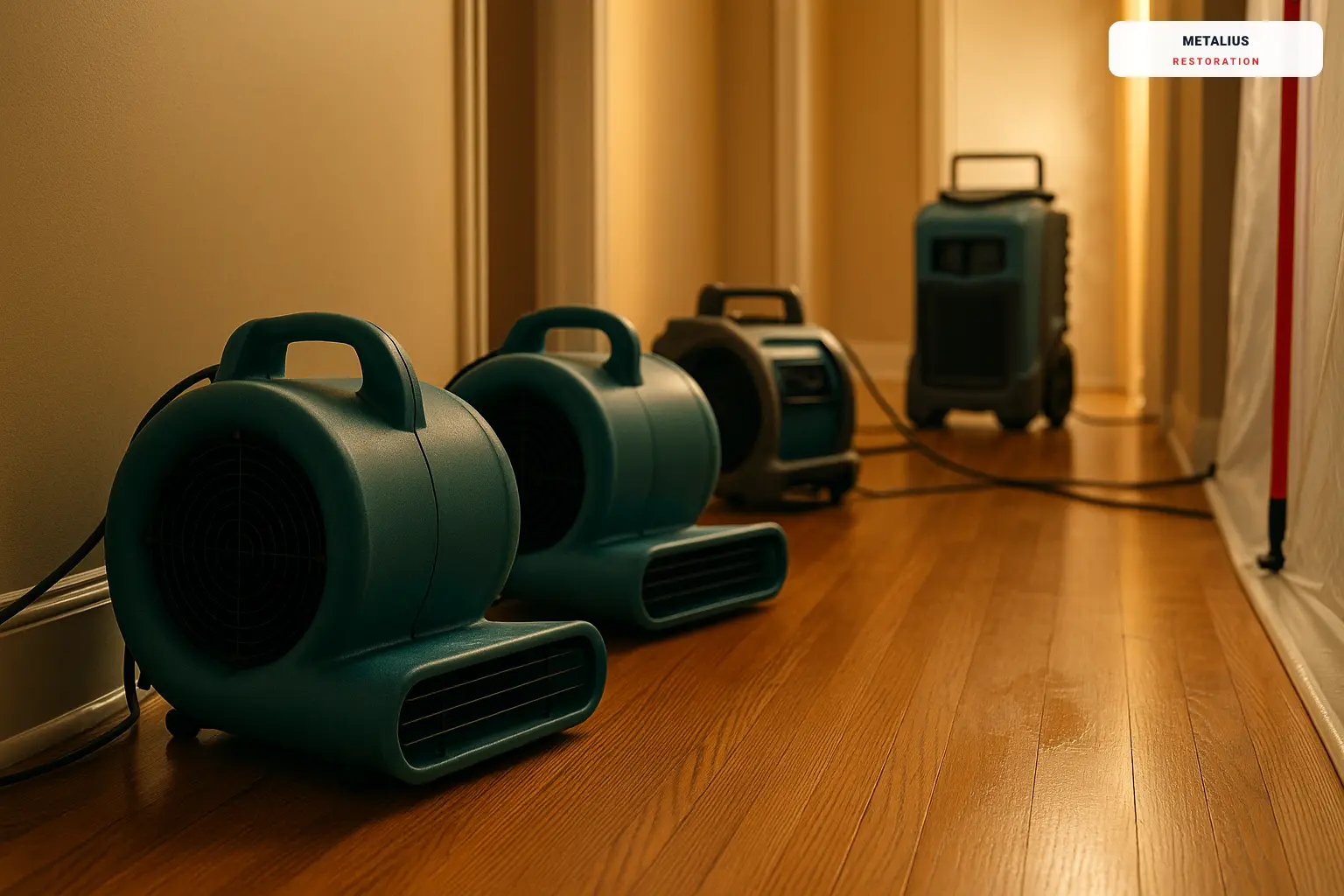
Once the truck is parked, the work follows the same pattern every time: source-control (water off, power isolated, containment up), then comprehensive documentation (photos, moisture readings, written cause-of-loss narrative), then sized equipment deployment. Daily monitoring visits with logged readings until every wet substrate returns to baseline. The reconstruction crew is the same team that did the mitigation — same phone number, same contract, same accountability through final walkthrough.
Insurance documentation in Mercer County
What ends up in your carrier file from a Trenton job: a labeled building diagram with daily moisture readings, sequential photographs of every wet substrate at each visit, equipment run-time logs by unit, separate Xactimate scopes for mitigation and reconstruction with line-item pricing, and a written cause-of-loss summary tying the event to the right policy bucket. We bill the carrier directly when assignment is authorized, so out-of-pocket exposure for the homeowner is minimal.